Construction Works Warranty Certificate Template: Terms & Steps Guide
A complete guide to the terms of contracting guarantee letters and the steps to prepare a correct warranty certificate, covering the difference between works warranty and product warranty, and common mistakes in the Saudi market.
Yes, a construction works warranty certificate is a document confirming the contractor's commitment to executing the contract per specifications, usually represented as a retained percentage of payment certificates (often 10%) released after final handover and confirmation that the work is defect-free.
Guarantee letters and works warranty certificates are among the documents that most often cause disputes between contractors and owners — not because the concept is complicated, but because tracking tends to be weak: a retention percentage calculated wrong, a release date forgotten, or one guarantee type confused with another. In this guide, we'll cover everything you need to know about warranty certificates in contracting, from the legal terms to how a system like Moonsab tracks your retentions in real time without a separate Excel file.
Guarantee Letter Terms in Contracting
Guarantee letters in construction contracts take different forms depending on the project stage:
Bid Bond: Submitted when bidding for the tender, usually a small percentage of the bid value
Performance Bond: Submitted after contract award, guaranteeing the contractor's full commitment to executing the contract
Advance Payment Guarantee: If the owner pays an advance, a guarantee covering that value is required until it's deducted from payment certificates
Maintenance/Retention Guarantee: Covers the maintenance period after handover, and is the type most closely tied to retentions
The core requirement across all these types is that the guarantee be issued by an approved bank or a licensed financial institution, carry a defined percentage of the contract value, and have a clear validity period. In government contracts, this is directly regulated under government tenders and procurement law, so the contract text and guarantee letter terms must be fully consistent.
How to Prepare a Warranty Certificate
Steps to prepare a warranty certificate correctly:
Determine the required guarantee type based on the project stage (bid, performance, advance payment, maintenance)
Calculate the agreed percentage from the total contract value
If the guarantee is retention-based, make sure the percentage is deducted correctly from each payment certificate, not as one lump deduction at the end
Clearly document the guarantee's start and end validity dates
Link the certificate to the original contract and the payment certificate numbers it was deducted from
The steps most often skipped are the fourth and fifth — many companies document the guarantee value without linking it to a clear release date, causing delays in recovering the amount even when the project is finished defect-free.
Do Spare Parts Have a Warranty?
Spare parts and equipment used on a project carry a warranty entirely separate from the contractor's works warranty. This warranty is issued by the supplier or manufacturer, covering manufacturing defects for a defined period (one or two years, depending on the product), and is different from the maintenance guarantee that covers the quality of execution itself.
A common problem is that companies mix the two types in their documentation, so when a fault occurs after handover, it's unclear whether responsibility lies with the supplier (product warranty) or the contractor (maintenance guarantee). The fix is to document each spare part or equipment warranty separately, linked to its purchase invoice number, instead of lumping it under a general "warranty" clause in the contract.
Construction Works Warranty Certificate Template (Word)
A Word-format warranty certificate template is useful when you need to edit the details for each contract individually before printing or sending it for signature. The core fields any template needs:
Project name and contract number
Guarantee type (bid, performance, maintenance)
Value and percentage of total contract
Start and end dates
Issuing party (bank, or internally retained percentage)
Signatures of both parties
If you're building the template yourself, it's best to keep each of these as a separate field rather than a single paragraph, so you can review them quickly during an audit.
Warranty Certificate PDF Template
Once the certificate is prepared and signed, it's converted to PDF to become the final, non-editable version. This matters especially when the certificate will be attached as an official document in the contract file or submitted to a government entity, since any later edit could cast doubt on the document's validity.
The difference from the Word version is that PDF offers no editing flexibility, so you need to confirm all the data is correct before converting, and keep the original Word file archived in case you need to prepare a similar certificate for another contract.
Product Warranty Certificate Template (Word)
This is different from a works warranty certificate, and concerns the product or equipment itself rather than the contractor's execution. It's usually issued by the supplier or authorized agent and includes: product name, serial number or batch, warranty duration, and usage conditions that void the warranty if breached.
This template is typically kept as part of the project's final handover file (As-Built / Handover File), so the owner can refer back to it if a piece of equipment fails after handover.
How Moonsab Handles This Step
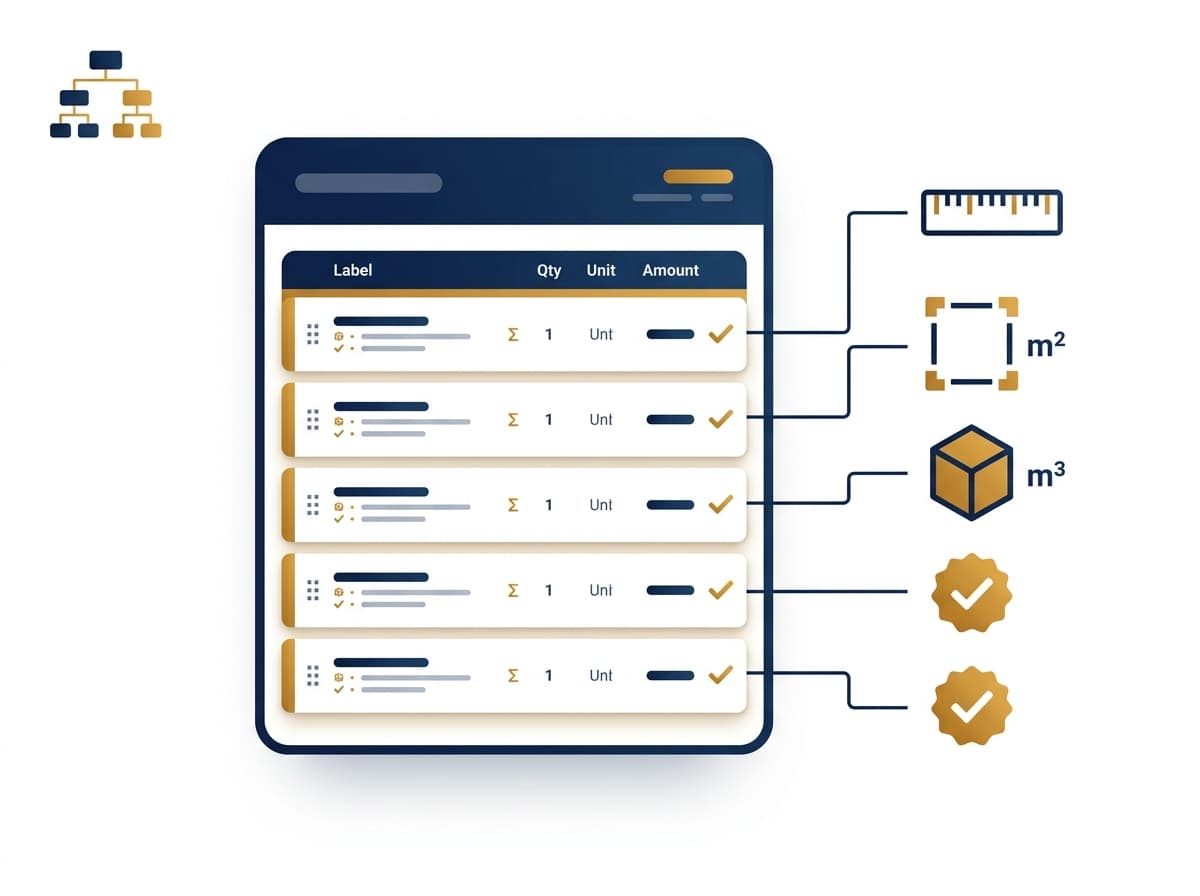
In Moonsab, retentions and works warranties aren't a separate document tracked manually — they're an independent line item inside the contract itself within the system. You set the retention percentage (often 10%) once at the contract level, and the system automatically calculates it on every payment certificate issued, without needing to redo the calculation manually each time.
The core benefit is that you track your retention balance and expected release date in a single screen, directly linked to the contract and its payment certificates. You can explore this in detail on the Moonsab features page, and read about how payment certificates work in our Payment Certificates article.
Common Mistakes in the Saudi Market
A few mistakes keep showing up in how warranty certificates and retentions are handled in the Saudi market:
Documenting the retention value in a separate Excel file from the payment certificates, making it hard to know the actual balance at any point
Forgetting the guarantee release date after the maintenance period ends, delaying the contractor's recovery of money they've actually earned
Mixing works warranty and product warranty in the same document instead of documenting each separately
Not linking the warranty certificate to the contract number and the payment certificates it was deducted from, making the amount hard to prove in a dispute
Fixing these requires one system connecting the contract, payment certificates, and retentions — instead of each piece being documented in its own disconnected place.
Track your retentions in one place. Try Moonsab and see every contract's balance and release date clearly.