Finishing Items Pricing Sheet & Contracting Price Analysis: Complete Guide
A complete guide to building a contracting price analysis sheet (finishing, structural, electrical) with the right components, plus common pricing mistakes in the Saudi market.
Yes, a finishing items pricing sheet is a file that breaks down every finishing item into its core cost components (materials, labor, equipment, overhead), so you reach an accurate price per item instead of a rough estimate that eats into your profit margin during execution.
Pricing finishing items is one of the most sensitive stages of preparing a bid, because a small error in analyzing one item's price repeats across hundreds of similar items in the same project. The difference between a professional pricing engineer and rough guesswork isn't just experience — it's having a clear system for breaking every item down into its components. This guide covers how to properly analyze contracting item prices, from the general sheet to specialized items like electrical works, and how a system like Moonsab connects this analysis directly to the entire tender cycle.
Contracting Price Analysis Sheet
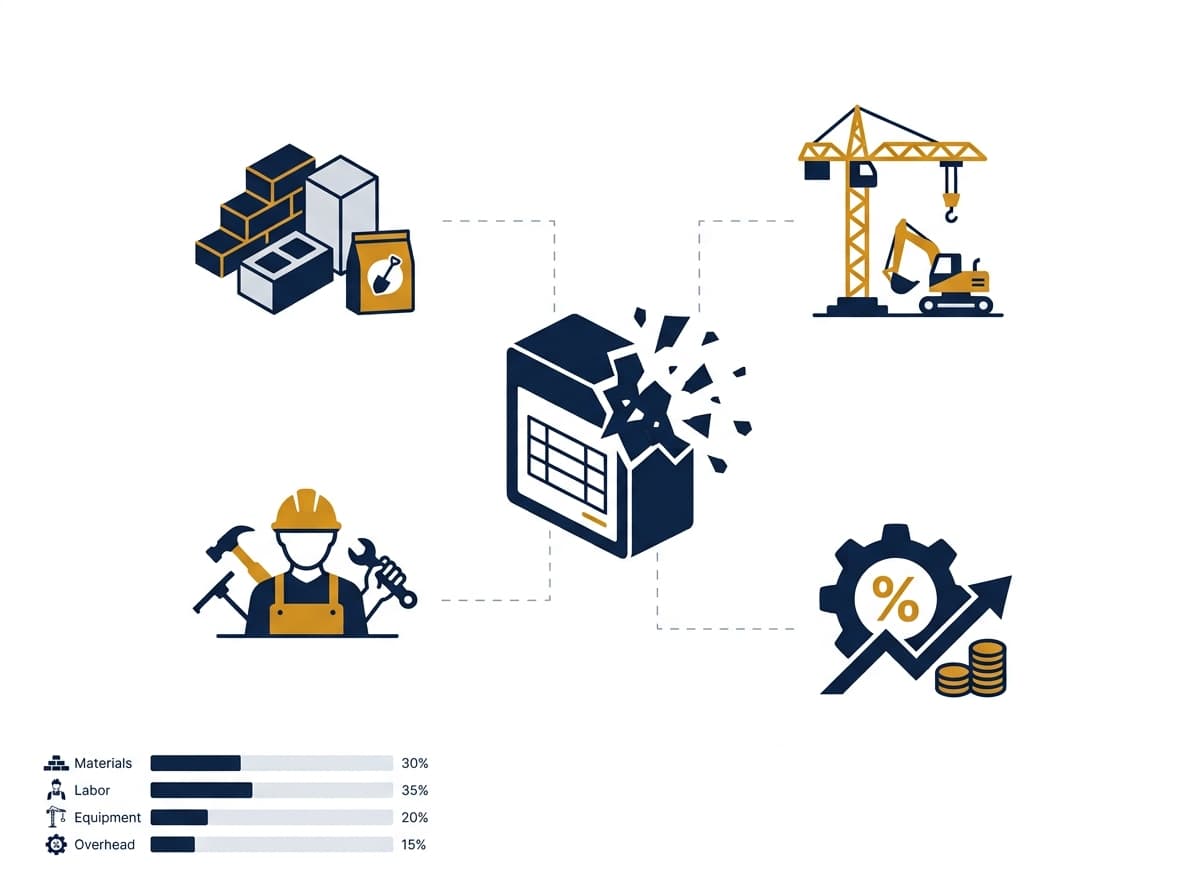
A contracting price analysis sheet (also known as a cost breakdown) is the tool a technical office engineer or pricing engineer uses to reach an accurate price for a single item, instead of relying on a rough estimate. Each item is typically broken down into four core components:
Materials: the quantity of material required for the item × unit price
Labor: the number of work hours required × the hourly rate for that trade
Equipment: any machinery needed to execute the item and its operating cost
Overhead & profit margin: a percentage added to cover administrative costs and the targeted profit margin
Every item in the quantity schedule should be broken down the same way, so the final price is built on real cost rather than a random number.
Contracting Price Analysis in Excel
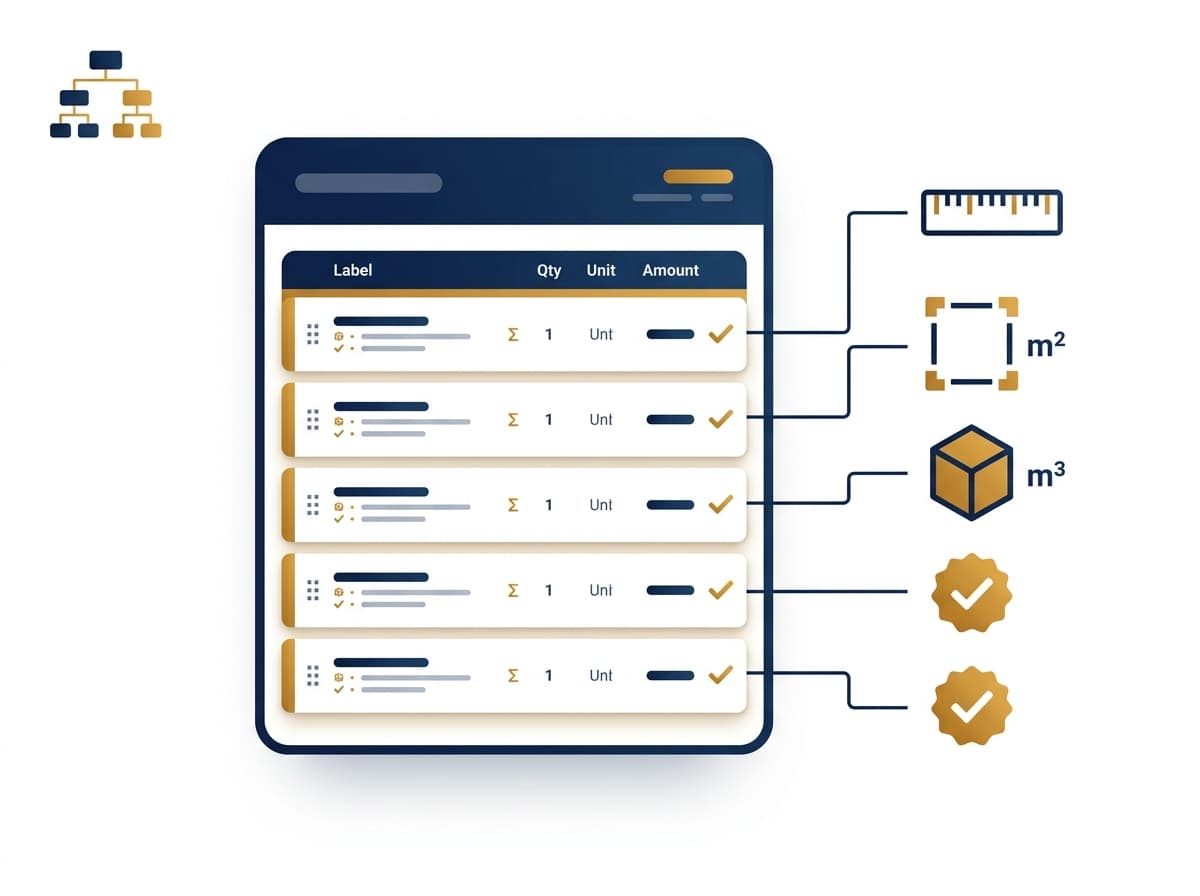
A contracting price analysis in Excel is usually built hierarchically: a main sheet with the total for each item, and from each item you can open a detailed breakdown (materials, labor, equipment) in a sub-sheet or expanded row. The advantage of Excel is that you can link prices with formulas, so if a material's price changes, the item's total price updates automatically.
A common problem is that companies use the same sheet for every type of item (civil, architectural, finishing, electrical, mechanical) without customization, so the sheet grows and becomes hard to track, and any update to a core material price requires manual edits in dozens of places.
Contracting Price Analysis PDF
Once the price analysis is finished in Excel, it's often converted to PDF when the goal is to present the analysis as part of the bid file submitted to the client. This version is final and non-editable, and shows the client transparently how you arrived at the price, which strengthens your negotiating position when the bid is reviewed.
The key difference from the Excel version is that PDF can't be edited after conversion, so you need to confirm every number is correct beforehand, and keep the original Excel file archived in case you need to adapt the analysis for another bid.
Excel Pricing Sheet
"Excel pricing sheet" is sometimes used more broadly than "price analysis," covering any file that converts quantities into final prices — whether it includes a detailed item breakdown or just an agreed lump-sum price. The key difference is that a sheet with a real breakdown (materials + labor + equipment) lets you revisit your price if the market changes, while a sheet with only a final price gives you nothing to fall back on during review.
If you're building a pricing sheet from scratch, it's always best to start with the detailed breakdown even for a small project, so you can reuse the same rates as a reference in future bids.
Structural Items Price Analysis PDF
Structural items price analysis differs from finishing works, because these items (excavation, concrete, reinforcement steel, masonry) have their quantities calculated directly from structural drawings, and prices are affected by factors like excavation depth, rebar size, and required concrete strength. Analyzing these items needs higher accuracy in quantity calculations before pricing even begins.
Converting the structural items price analysis to PDF is especially useful when submitting a bid for large projects, since it shows the project owner that the pricing is based on precise engineering calculations rather than a rough estimate.
Electrical Pricing Sheet
An electrical pricing sheet is different from other sheets, because electrical items use completely different units of measurement than structural and finishing works — per point, per linear meter of cable, per panel, or per accessory. If you use the same general pricing sheet without adjusting it, you'll struggle to enter the right units or compare prices logically.
It's always best to prepare a separate sheet for electrical items (and the same logic applies to mechanical), built on the same four-component breakdown (materials, labor, equipment, overhead), but with specialized units suited to this type of work.
How Moonsab Handles This Step
In Moonsab, the tendering module covers the full cycle from receiving the client's RFP to converting the winning bid into an actual project. Item price analysis follows the same logic (materials + labor + equipment + overhead), but it's linked directly to the RFP, the Bid, and the Bid Items — with no need to move numbers between separate files.
The core benefit is that pricing estimates become the actual cost baseline after award, instead of a number that gets abandoned once the bid is won. That means you can see any variance between estimated and actual cost as it happens. You can explore this in more detail on the Moonsab features page, and see which plan fits your company size on the plans page.
Common Mistakes in the Saudi Market
A few mistakes keep showing up in how contracting items are priced and analyzed in the Saudi market:
Using the same analysis sheet for every trade (civil, finishing, electrical) without adjusting the units of measurement for each type
Relying on outdated prices in the sheet without regularly updating material and labor rates
Not separating overhead and profit margin from actual execution cost, making it hard to know the real profit margin per item
Losing the link between pricing-time estimates and actual post-execution cost, so pricing accuracy never improves across future bids
Avoiding these mistakes requires one system connecting the entire tender cycle from pricing through execution, instead of each stage living in a separate sheet.
Calculate your first item's cost for free. Try Moonsab and see the difference between pricing built on real analysis and rough estimation.